Friday, September 26, 2014

Design Process - Tech Box Photographs 1 (EDITING)

For the tech box photographs, my favorite one is the last one (first below).
  • tech box looming over human (ruling over life)
  • highlight on lock - focal point
  • white space on left side of human - not overcrowded

Now I am looking at different types of edits and how they affect the message the photographs convey.


Editing software used: http://apps.pixlr.com/express/ & http://www.picmonkey.com/


Black & White 1
  • this quite accurately conveys the message
  • the whole photograph looks dark - fits my purpose
  • the black of the tech box emphasises that it is the "hell" of the photograph
  • the whole photograph is black and white - because of the contrasting dark and light colors, can obviously see the differences
  • because the lock is the only silver part - shows in this editing mode - is clearly the focal point --> then the human
Black & White 1 & Focal Point on Lock
  • this quite accurately conveys the message
  • the whole photograph looks dark - fits my purpose
  • the black of the tech box emphasises that it is the "hell" of the photograph
  • the whole photograph is black and white - because of the contrasting dark and light colors, can obviously see the differences
  • the focal point is set on the lock - but the rest of the photograph is a bit more blurred
Black & White 2
  • this quite accurately conveys the message
  • the whole photograph looks dark - fits my purpose - but the black and white color is a bit tinted, which looks a bit weird
  • the black of the tech box emphasises that it is the "hell" of the photograph
  • the contrast between the silver and the color of the human's face is very small - not clear what the focal point is
Black & White 3 & Focal Point on Lock
  • this quite accurately conveys the message
  • most of the photograph is quite dark and dull - fits my purpose
  • the focal point is clearly on the lock --> directs viewer to look then at the human face - but it looks a bit weird and unnatural

Thursday, September 25, 2014

Design Process - Tech Box Photographs 1

Tech Box
This photograph is meant to show the frustration of the tech box among many students through my "model" looking sulkily/frustratedly at tech box. The black color of the tech box represents the "hell" of the photograph.

Below is my reflection for the photographs I took for the tech box photograph:

  • angle is boring and uninteresting - straight at the tech box
  • the human face is turned away - can't see the emotions properly
  • bad framing - door frame (top left) and many other unwanted objects are in the photo
  • bad composition - just a tech box and a human in front of it
  • the human face is still turned away - can't see the emotions properly
  • BETTER angle is more interesting
  • BETTER framing - only the door frame (bottom left) is in the frame now
  • BETTER composition - not just capturing the whole body and the whole tech box

  • GOOD angle is more interesting
  • GOOD framing - only the door frame (bottom left) is in the frame now (photograph below is cropped version)
  • GOOD composition - not just capturing the whole body and the whole tech box
  • BETTER now you can see the human face and its emotions more clearly
This is a cropped version of the photograph above, which has better framing
  • GOOD angle is more interesting
  • GOOD composition - not just capturing the whole body and the whole tech box
  • GOOD now you can see the human face and its emotions more clearly
  • GREAT framing - only the door frame (bottom left) is in the frame now
  • GOOD different angle (high angle) - interesting but can't really see the human face
  • GOOD composition - not just capturing the whole body and the whole tech box
  • WORSE the human face is turned away - can't see the emotions properly
  • WORSE framing - it is a bit awkward, and there is a big empty space next to the human
  • GOOD angle and composition - able to capture the human face in connection with the tech box
  • BETTER the human face is turned away - can't see the emotions properly
  • BETTER framing - the frame is used quite well, although the white space next to the human still looks a bit empty

  • GOOD different angle (tilted angle) - interesting because this gives a feeling of looking down at the tech box, however it looks a bit unnatural
  • GOOD composition - not just capturing the whole body and the whole tech box
  • BETTER now you can see the human face and its emotions more clearly
  • BETTER framing - the frame of the photograph is filled pretty well, without seeming to overcrowd it (upper corners)
  • GOOD different pose - different how now the human is looking down at the tech box
  • WORSE composition - just a portrait photo of the tech box and the human
  • WORSE the human face is looking down - can't really see what is happening on her face
  • WORSE framing - some unwanted bits on the two sides of the photograph
  • GOOD different angle (tilted angle) - interesting, less boring
  • BAD composition - just a portrait photo of the tech box and the human
  • BAD the human face is looking down - can't really see what is happening on her face
  • BAD framing - lots of unwanted bits in the photograph (e.g. door frame, light switch) that I can't seem to completely get out even when cropped

    Design Process - Sculpture Photographs (EDITING)

    For the sculpture photographs, my favorite one is the last one (first below). 
    • background of environment and setting
    • connection between human and sculpture
    • large part of the top of the photograph - looming over our lives

    Now I am looking at different types of edits and how they affect the message the photographs convey. 

    Editing software used: http://www.picmonkey.com/


    Black & White
    • this quite accurately conveys the message
    • the sky is quite dull - fits my purpose, but too monotone
    • the whole photograph is just black and white - too boring and monotone
    • the focal point is not clear


    Black & White - highlight on sculpture
    • this quite accurately conveys the message
    • the sky is grey-ish - fits my purpose, more interesting than the first photograph
    • more color variation with highlighted sculpture - more interesting and 
    • the focal point is clearly on the sculpture --> directs viewer to look then at the human face

    Focal Point on Sculpture
    • the focal point is clearly on the sculpture - but the other subjects are not clear enough
    • the color of the background is very unnatural and unfitting for the emotion of the photograph

    Design Process

    The theme of my three photographs is "grey", focusing on negative emotions such as stress, discontent, unhappiness, frustration, annoyance, etc. of CISHZ. I wanted to do this because it is different, because most other people would think to convey the positive parts of CISHZ and HZ in general. I think it is important to convey these negative emotions, which I see around me daily. I have also looked at other "grey" themed photos, and I think it would be interesting to take photographs imitating these masterpieces. In my work, I will mainly use people to convey the emotions. The face of a human are so complex and deep; I think that it will convey my message best.

    For each photograph, I will take many different ones from different angles, using different composition and framing to find the best one. After that, I will put the photographs I have taken side-by-side, evaluating on artistic elements (e.g. angles, lighting, composition) as well as how well the emotions have been conveyed. (Inspiration)

    I will also look at how different editing looks and how they can aid me to convey my message. For example, after research on the internet, I found out that many photographs with a "grey" theme use a black, grey and white color scheme. This is good because it is very monotone, further emphasising on the emotions stated above. I think that I will need editing because a lot of the color in the photographs are too light, therefore disturb the feeling of the photograph as a whole.

    Design Process - Sculpture Photographs

    Sculpture
    This photograph will be my title piece of the three photos I am going to take for my final piece of work. I use the grey sky, the human face and the sculpture to represent my theme. The sculpture is one of the main focuses of this photograph, conveying stillness and dullness, as well as the sluggishness and slow-paced life of CISHZ, within the "grey" theme.

    Below is my reflection for the photographs I took for the sculpture photograph:

      • too far away - can't see details (e.g. emotions on face)
      • bad angle - mostly see top of head, not face (main point)
      • sculpture looking away - no connection between human and sculpture
      • good angle and framing - balance between human and background
      • too far away - can't see details (e.g. emotions on face)
      • arms holding sculpture are awkwardly extended
      • BETTER angle - see more of face, but still not enough
      • GOOD sculpture looking - some connection between human and sculpture
      • GOOD angle and framing - balance between human and background
      • too far away - can't see details (e.g. emotions on face)
      • bad lighting - the face looks very pale and white
      • bad angle - see some of face, but slightly turned away
      • BETTER arms holding sculpture look more natural
      • GOOD sculpture looking - some connection between human and sculpture
      • GOOD angle and framing - balance between human and background
      • too far away - can't see details (e.g. emotions on face)
      • WORSE bad angle and framing - too much of background, human cut at knees (unatural)
      • BETTER lighting - colors look more natural
      • BETTER arms holding sculpture look more natural
      • GOOD sculpture looking - some connection between human and sculpture
      • bad angle and framing - too much of background, not enough of grey sky (another main point)
      • GOOD sculpture looking - some connection between human and sculpture
      • BETTER more close-up - see details and emotions on face bit more
      • GOOD close-up - see details and emotions on face
      • GOOD splotch near head represents imperfection
      • GOOD angle and framing - balance between human and background
      • GOOD low angle - face facing down, stressing unhappiness
      • GOOD sculpture looking - some connection between human and sculpture

    Tuesday, September 23, 2014

    Elements of a Photograph

    What elements in a photograph can be manipulated for conveying the photographer's own agenda?

    I think that many elements in a photograph can be manipulated so that the photographer's message can be conveyed correctly to the viewer. These elements include, but are not limited to: subject, shape, color, line, lighting, composition and angle.

    Subject is the main thing the photographer wants to shoot in the photograph. This is what the viewer usually focuses on; technical elements are what aid to make it more interesting and memorable. The subject in the photograph below is the girl.


    "The subject in the photograph below is the girl."

    Shape, color and line are the main components that make up each photograph. These are the elements that the viewer's eyes move around with. Looking at different types of shapes, colors and lines gives the viewer different emotions and feelings. Comparing the two images below, you can quite obviously see the difference between the emotions for the two. The first one, which has bright colors, natural shapes and light lines, gives the viewer a happy feeling. While the second one, with dark colors, and rigid shapes and straight lines, gives the viewer a feeling of frustration and anger.


    "you can quite obviously see the difference between the emotions for the two."

    Lighting is the different amount of light used in a photograph. The darkness or lightness (color and hue) define the feeling of the photograph. The photograph with the darker lighting below gives you a feeling of eeriness, loneliness, and sadness. In comparison, the photograph with the brighter lighting gives you a feeling of happiness, hope, and excitement.


    Dark vs. bright lighting

    As Ming Thein states, "composition is how the various elements of an image are located relative to one another, and how this spatial relationship tells the story of the main subject or conveys the desired message". Putting the subject next to different objects may mean different things. For example, in the three photographs below, the subject is the same (Unisphere). But using different composition, it changes the photograph dramatically.


    Different composition

    Angling is positioning the camera to shoot from different angles to see the subject relative to the background in different ways. Different angles allow for the viewer to look at the subject in different ways. In the photographs below, the photographer is shooting the same subject (a green boat), but using different angles. As you can see, they all look different, giving the viewer different perspectives and conveying different feelings and emotions.


    Different angles

    For more specific information, look at "What Makes a Good Photograph?".

    It is important to manipulate all these elements in the right way to convey the right message to the viewer.

    Monday, September 22, 2014

    Inspiration from Photographers

    I mainly looked at photographs that are similar to the theme I want to convey in my final work, which is the "greyness" of HZ. I found photos that show emotions like anger, frustration, sadness, etc. Through these, I can learn about how to represent these feelings with my own photographs.

    Small boy looking angrily at the camera

    Boy frustratedly grabbing at his hair


    I think that this photograph below shows the sadness of this little girl, with her head in her knees. I think that the clock in the chair represents time, which may symbolize "time running out", or frustration about a certain point about time. I think that putting objects like this in the frame are good ways of clarifying or adding to the message conveyed.

    Little girl with hands in knees and clock on chair

    Man unhappily gazing upwards

    Sculpture and grey background

    I noticed that most, if not all of the photographs above use a mostly black-and-white and/or grey theme, which conveys really well the emotions of the photographs. I also noticed that many include humans in them (usually their face). I think this really helps in conveying the emotion of the photograph, since the human face is so complex; it conveys many meanings.

    Sunday, September 21, 2014

    Imagination and Creativity

    Are imagination and creativity as important for a photographer as a painter? When and how can photography be more about imagination than reality?

    I think that imagination and creativity for a photographer is every bit as important as for a painter. Firstly, artistic photography, as explained in "Is Photography Art?" is art, just like paintings. I think the fact that photographers are able to turn ordinary objects into interesting and memorable photographs requires lots of imagination and creativity. The photographer has to work on artistic elements, such as composition, framing, lighting, and angles, which affects the message conveyed. For example, Rolph Gobits is a photographer who never take his photographs in a studio. Instead, he uses other backgrounds, mixing elements of lighting, architecture, color schemes, furnishings, etc. to create them. In the example below, the background of this portrait is now a studio, but instead a snowy background. This might perhaps represent the woman's background (where she grew up/where she lives...), or what she enjoys. The possibilities are endless, and so much more interesting than a set background.


    A portrait of a woman with a snowy background (Rolph Gobits)

    I think that photography can be more about imagination than reality with abstract photography. This type of photography is much more vague and imaginative. The subjects in the photograph may not entirely relate to the actual function of the objects. This would mean that much more imagination would be put in, rather than focusing on reality.

    An example of abstract photography

    Saturday, September 20, 2014

    Tourist vs Artistic

    What are the differences between a point-and-shot tourist photograph and an artistic photograph?

    I think that the main difference between the two types of photographs is the purpose of the two. With different purposes, they would naturally come out differently.

    Tourist photographs are more for the purpose of recording "I've been there and done that". They are usually for own use, good for looking back after a while and thinking back to the experiences of that time. They are usually quicker, you take it and move on, so not much thought is put for artistic elements such as lighting and composition.

    Artistic photographs are usually taken to convey a message to its viewers. They are deeper and more composed for this purpose. The photographers use much more time to think about the artistic elements, such as finding the right lighting, the right angle, etc. The target audience is not the photographer themselves, so artistic elements are key to being able to convey the right message.

    For example comparing the two photographs below, you can quick obviously see the differences. The first "selfie" is more focused on being able to capture the person, to show that he has been to the South Pole. There is a shadow in the bottom left corner and a black thing on the right side of the photograph. It is obvious that nearly no thought has been put into artistic elements like framing and lighting. In the second artistic photograph, much more consideration has been taken into artistic elements like composition and the lighting. For one, there is one large ice block that fits just right on the right side of the photograph, contrasted by the smaller ice pieces on the left side.

    "selfie" (tourist photograph) in South Pole

    artistic photograph in North Pole

    Friday, September 19, 2014

    Photography Notes

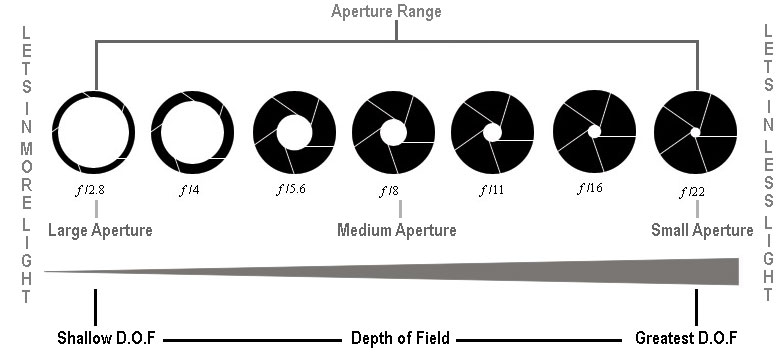
    • APERTURE: device on the camera that opens and closes to control how long the focal plane is exposed to light
    • SPEED: unit of measurement which determines how long shutter remains open as the picture is taken
      • the slower the shutter speed, the longer the exposure time
      • shutter speed and aperture together control the total amount of light reaching the sensor
    • DEPTH OF FIELD: amount of distance between the nearest and farthest objects that appear in acceptably sharp focus in a photograph


    Sunday, September 7, 2014

    Is Photography Art?

    In many people's mind, a photograph is a picture made by a machine. It is easy and simple to pick up a camera and press the button. So, how can photography be art?


    To answer this question we first need to define art. According to New Oxford American Dictionary, art is "an expression or application of human creative skill and imagination".

    By this definition, I don't think that all photographs are art. As Jo Plumridge (photographer) rightly states, only photographs "in the right circumstances" should be considered art. So what are these so-called "circumstances"? I believe that the most important of these "circumstances" is to be able to use just a snapshot to convey a strong message or story, to evoke emotion for the viewer. This is definitely no different from more visual pieces of art.

    I think photography can be art because of the skill and artistic ability required to take a good photo. It is not easy to capture the right moment and the right subject matter to convey the message. For example, in the two examples below, although for the same type of event, you can see clearly how big the difference the outcome is. The photographer was unable to capture the moment is the first photo. As you can see, it is bleak, uninteresting and simply doesn't convey the right message of the happiness of a wedding. While in the second one, the photographer absolutely captures the right moment of the happiness and excitement of the wedding day. 


    "It is not easy to capture the right moment"

    Also, using other elements in the background of the photograph to compliment the subject to help tell the story is no easy task. Things such as angles (e.g. close-up, long shot, low-angle, high-angle), lighting and composition can really affect the outcome of the photograph.


    (For more details on what are the "right circumstances", please go to "What Makes a Good Photograph?")

    Friday, September 5, 2014

    What Makes a Good Photograph?

    What is the essence of a good photograph, or what constitutes a good photograph?

    I believe that there are two main parts to make a good photograph. Firstly, the message or the story the photograph conveys. Secondly, a number of different techniques that can make or break a photograph.

    I think that the message a good photograph conveys to the viewers can be specific or abstract, and should make the viewers think. "A  good photograph tells a story" notes Olivia Cheng (Nat Geo Awards Star Judge). I think that it can be either a common story that everybody can relate to, or a message that is free to be interpreted by different people. Different people may interpret a certain photo differently, as experiences and environment shape your views. As Justin Mott puts it, "the most important element of a photo [...] is it's ability evoke emotion." Whatever interpretation the viewer makes, a good photograph should always make the viewers feel something, whether it is curiosity, happiness, excitement, anger, or sadness. For example, looking at the photo below, you feel a sense of happiness and warmth.


    "you feel a sense of happiness and warmth"


    The techniques used to shoot a good photograph are also very important. This includes lighting, composition and framing, focus, as well as angling.


    Without light, no photographs can be taken, which shows how important lighting is. A photograph must have sufficient amount of light. The darkness or lightness (color and hue) define the feeling of the photograph, which affects the message being conveyed to the viewer. You can make the most ordinary subject interesting with the right amount of light, but the most unusual subject could become boring with flat or uninteresting light. In the two photos below, you can quite obviously see that the first photo has much better lighting. The details in the light and shadow areas can be seen, and the colors (e.g. skin color) all look natural.


    The effect of good and bad lighting

    As Ming Thein states, "composition is how the various elements of an image are located relative to one another, and how this spatial relationship tells the story of the main subject or conveys the desired message". Composition is very important, because it is what the viewer sees, hence affecting the message the viewer receives, which is a core part of any artistic photograph. There is no set composition for each subject. However, different compositions may result in different messages being conveyed. Any small adjustment in the composition of a photograph can greatly affect the viewer experience. If it is negative, it might be memorable in an unintended way, or the viewer may not even spend time to look at it, which would be a fail for the photograph. 

    The three photographs below are capturing a similar subject: a small school of yellow snapper. The only differentiation is their composition, which is what I will talk about. In the first photograph, the blue of the ocean against the yellow of the snapper creates a nice contrast. However, the majority of the fish form a diagonal line that all point to the lone fish on the bottom left corner. This fish is out of focus, just inside the frame, and the coral right next to it looks very unattractive. In the second photograph, the majority of the fish aren't so strongly pointing at the lone fish, which is better than photo one. However, they are now pointing at the coral, and the fish are now more tightly grouped, which doesn't help the message the photograph is trying to convey. In the third photograph, the coral in the background give something other than the blue of the ocean, which is a better setting. There is more space between the fish, which makes it feel less crowded. Also, there is one fish that overlaps the coral, showing more depth in the photograph.

    The effect of good and bad framing and composition


    Angling is positioning the camera to shoot from different angles to see the subject relative to the background in different ways. It may be an angle that is unusual, an angle that people rarely use to look at the subject, to give the viewer a new perspective and to notice somewhat ordinary  Again, there is no set angle, but different angles can convey different messages. It depends on what message the photographer wants to convey. Different angles include close-up shots, medium shots, long shots, etc. (as seen in the diagram below).

    Different camera angles


    In the two photos below, you can see how big a difference shooting from different angles make. Everybody has bad angles, so it is up to the photographer to find out what these are and to avoid them. Below, we use the example of the pregnant woman. First, the photographer starts from far away to start to get to know what the subject looks like on camera. Her front leg and arm are both bent, which create a nice curve, something you can see from this angle. Going closer, shooting from just lower than 90 degrees. This angle  makes the head look smaller, thus enlarging the size of the belly. In the forth photo, the photographer uses a variety of new angles, including at top view. As you can see, different angles emphasise on different parts of the subject, so it is important to have an idea of what is it that you want to be the "star" of each photograph.


    The effect of shooting from different angles


    Most importantly, a good photograph needs to have"interesting and engaging subject matter" (David Lazar). A photograph that is boring and uninteresting, even when taken with perfect technique, would never come close to being as good a photograph as somebody with limited technique but of something interesting and captivating. For example, the photo taken by Robert Capa below, is one of the eleven surviving negatives he shot during the Normandy landing. It may not be technically perfect, but are very memorable and striking, because of its subject matter and how it managed to convey the situation at the time. Only with good subject matter can a photograph be able to convey a strong message or story to the viewers. The subject should be fairly obvious on first sight for the viewer; it should stand out; be the focal point of the photograph. "A photograph without a subject is like a meal with no main course, or a story without a plot" (Ming Thein). This adds to the first point about conveying a message. Without a good subject, the photograph will not stay with the viewer for long, therefore not able to fulfil its purpose as a photograph.


    One of Rober Capa's Normandy Landing Shots